2026 Winter Edition Newsletter
This newsletter was written and produced on the lands of the Gadigal and Wangal people of the Eora Nation. We are deeply grateful to those who have preserved the rich history of Aboriginal custodianship of these lands.
Pride History Group’s next general meeting will be online on Monday 17 August 2026 at 6.30pm. We currently meet online on the third Monday of each month. Membership details can be found here https://www.pridehistory.org.au/membership
What projects are we working on?
Inner West History of LGBTI families project
Planning the 50th anniversary conference with First Mardi Gras 78ers
The Defiant Genders Oral History Project
A research guide to LGBTIQ+ collections and archives
Inner West Council’s Pride Walk launched
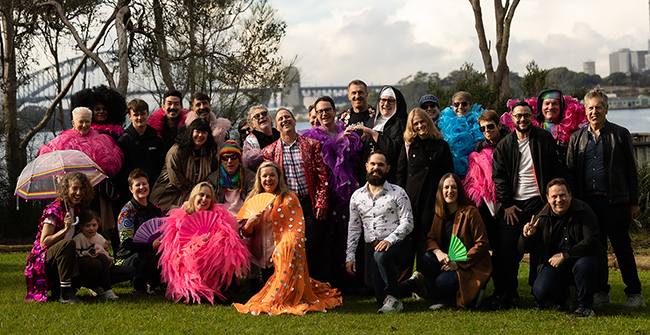
Inner West Council’s launch of the Pride Walk
Discover the stories, people and places that shaped LGBTIQA+ history in the Inner West. The Inner West Pride Walk is a self-guided history tour that brings together commemorative plaques, an interactive map, oral history recordings and archival photographs to share stories of significant people, places and moments in local LGBTIQA+ history. 17 Inner West Pride Walk sites span early activism and social movements, and connect to contemporary spaces of inclusion, community connection, and pride. Our President, Shirleene Robinson, worked with Inner West Council in collaboration with rainbow community elders, queer archivists, and LGBTIQA+ organisations and groups, to celebrate the people and organisations who helped pave the way for equality and inclusion, as well as those continuing to advocate and care for our communities today.
The Defiant Genders Project
Trans flag
The Defiant Genders Oral History Project, an initiative of Pride History Group, aims to preserve, amplify and safeguard the histories of trans and gender diverse people across Sydney. We are committed to addressing the gaps and distortions in historical records that have marginalised trans and gender diverse lives, particularly within progressive political and cultural movements. Historically, trans and gender diverse lives have been recorded in relation to medical or legal systems, rather than through community, activism, and cultural participation. These records offer little insight into how trans and gender diverse communities have connected with one another or how they have built relationships with other marginalised groups.
Through oral histories, we are documenting lived experience within the broader social forces that shape it, including racism, colonisation, economic inequality, disability, ageing, housing insecurity, migration, HIV and AIDS, and gender-based discrimination. We value the principle that the personal is political, while also documenting community participation, cultural contribution and collective struggle. The project is building intergenerational knowledge, strengthening collective power and ensuring that trans and gender diverse histories are preserved and made publicly available for future generations.
Participation in creative networks, grassroots, sports and other alternative spaces has rarely been formally documented. Without intentional preservation through the stories of those who were there, these histories risk disappearing altogether. Through this project we are committed to challenging this erasure by centring and documenting trans and gender diverse contributions to political and cultural life.
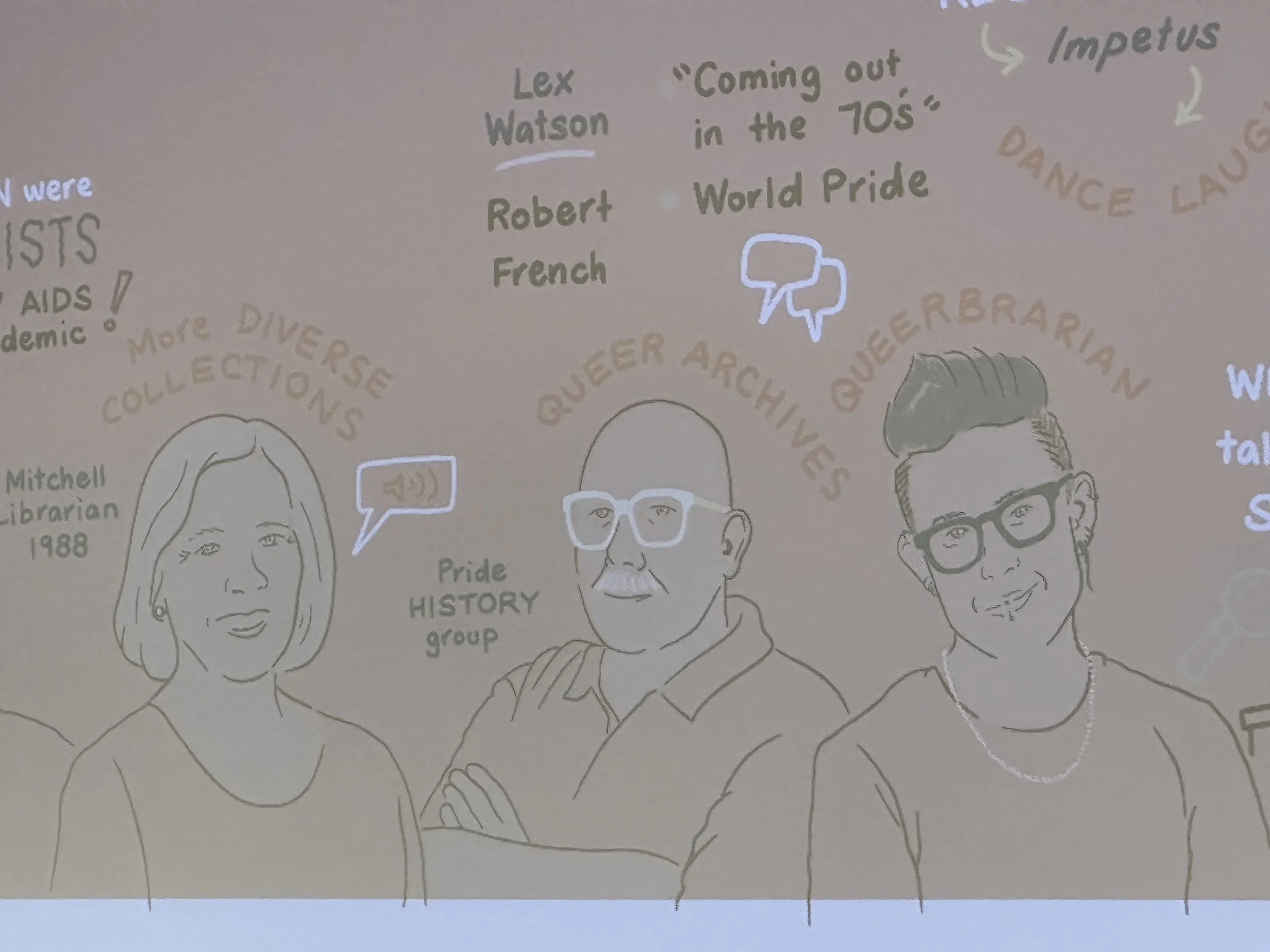
Queering the collection of libraries and archives
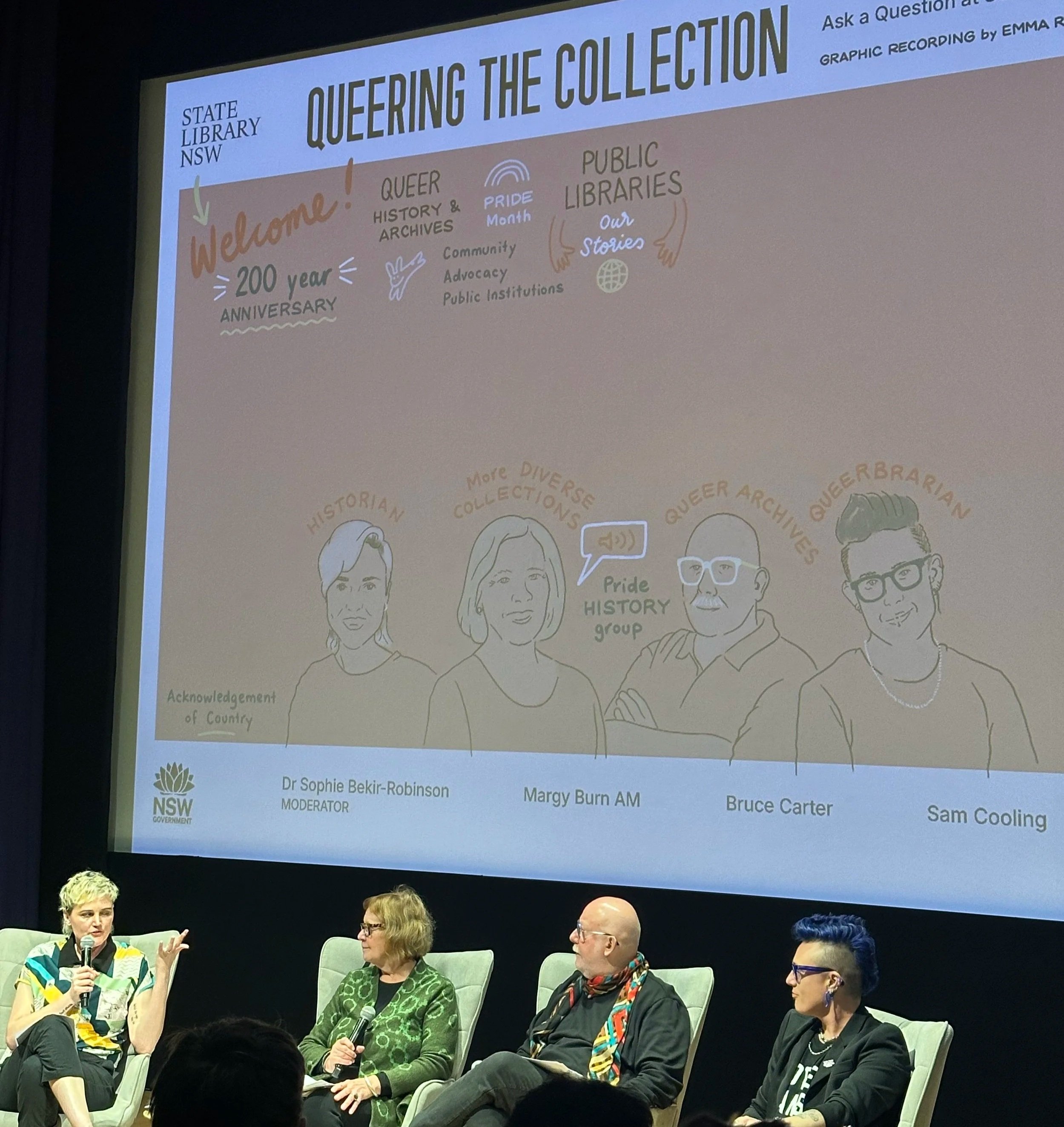
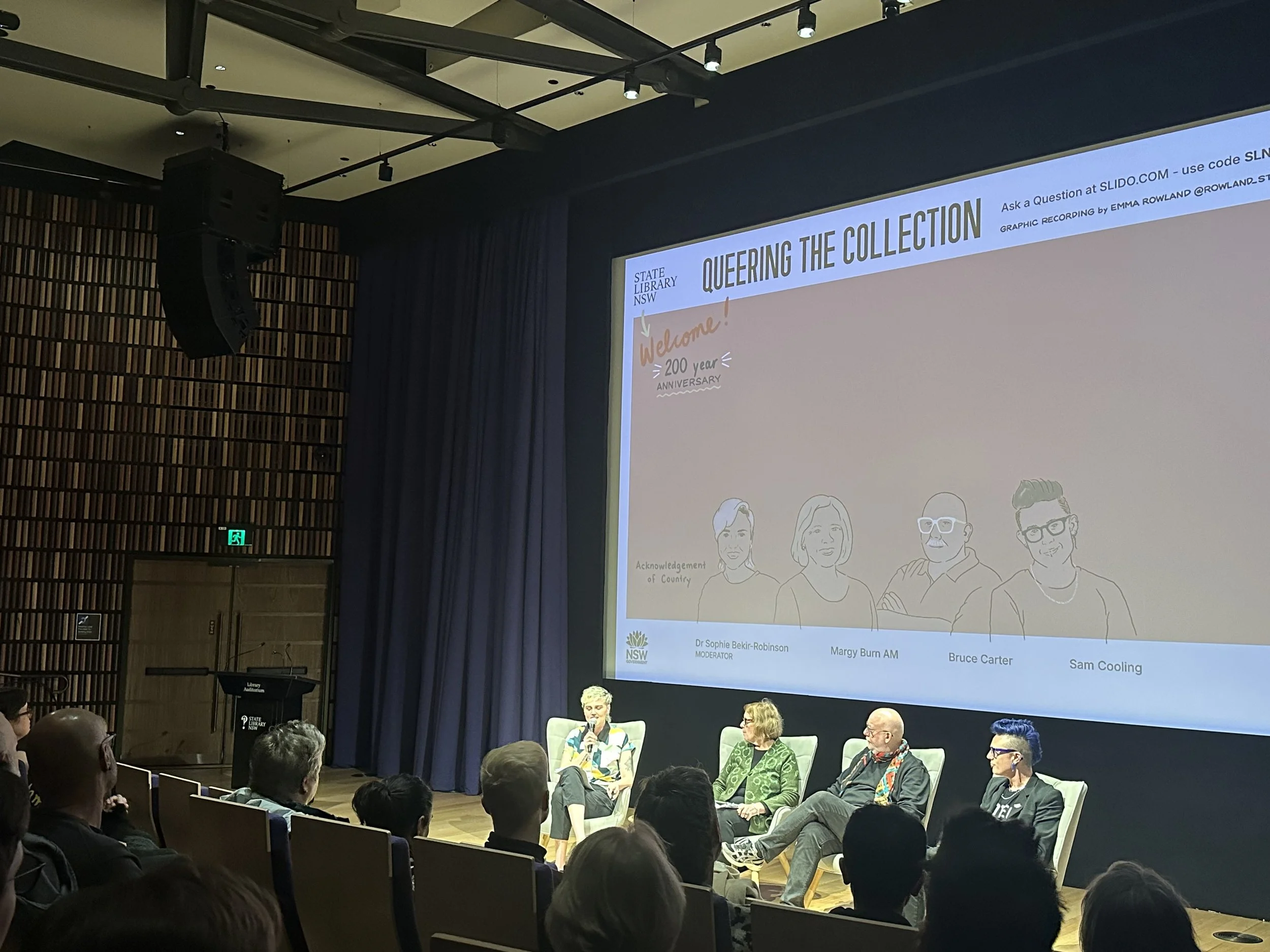
On 17 June 2026 the State Library of NSW held an event called "Queering the collection".
Margy Burn AM, Bruce Carter and Pride History Committee member, Sam Cooling – in conversation with Dr Sophie Bekir‑Robinson – explored the Library’s ongoing work to better represent LGBTQIA+ communities within its collections and looked at the way archives represent lives and stories that have been denied, ignored or hidden. You can watch a recording of the event here https://www.sl.nsw.gov.au/events/queering-collection-0
There is also a recording of Sam Cooling speaking on ABC radio about preserving LGBTQIA+ history at the State Library of NSW.
Australian Queer Histories Conference 2026
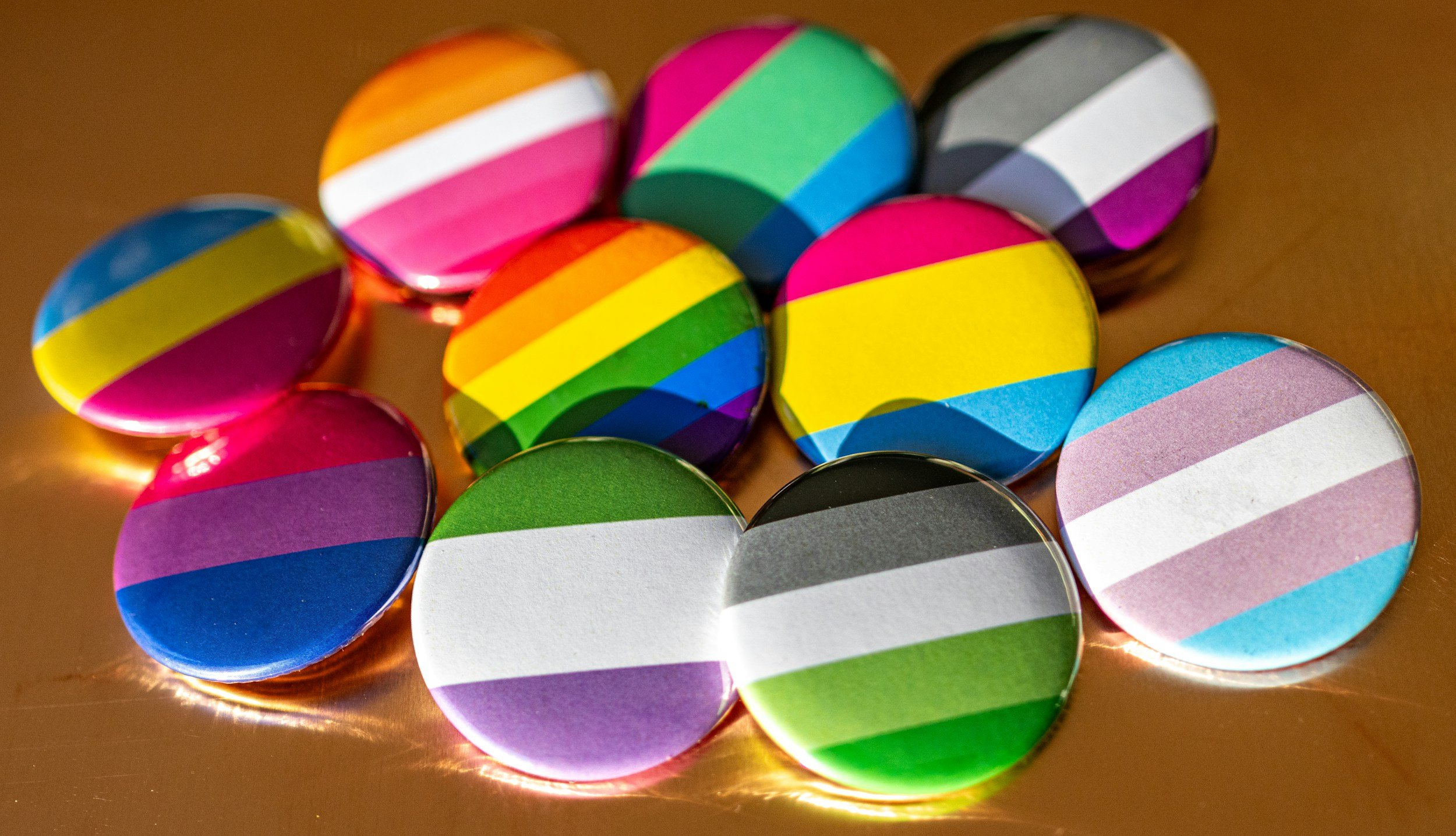
Queer badges
call for papers
The Australian Queer Archives is calling for proposals for presentations at their conference to be held at the Victorian Pride Centre in Naarm Melbourne on 7-8 November 2026. More information here.
NSW Heritage Strategy Released
In our Winter 2025 Newsletter, it was noted that the Pride History Group had make a submission in response to the draft NSW Heritage Strategy, which was released for public comment by the Honourable Penny Sharpe, NSW Minister for Heritage. Early in June 2026, the final Report was released. Go to https://www.environment.nsw.gov.au/about-us/policy-and-law/legislation/nsw-heritage-strategy.
As the Minister says in her foreword, “Heritage matters. It strengthens communities, supports wellbeing, and benefits our economy and environment. It shapes our cities, towns and neighbourhoods as they grow and change. This strategy aims to share these benefits fairly across New South Wales”.
The importance of Heritage listing
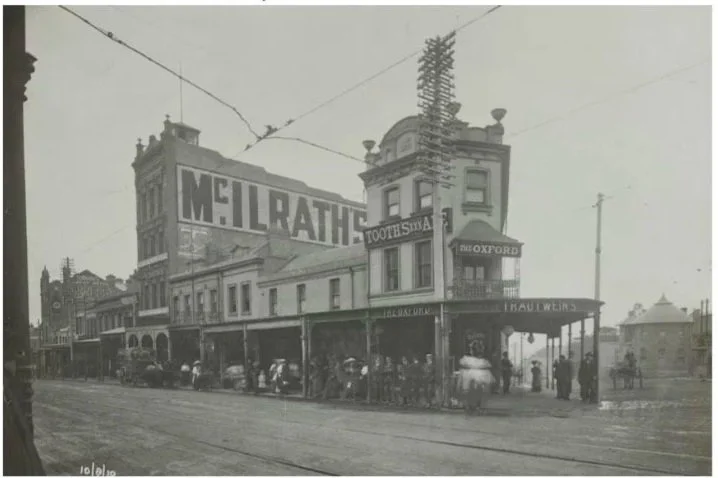
The Oxford Hotel 1910. Image courtesy of City of Sydney Archives
Getting a heritage listing is an important part of acknowledging aspects of the lives of a once-despised minority in any city's history. We need to see ourselves and our communities reflected in the heritage we protect in this state. And this is especially important now.
So it is particularly significant that three new heritage listings have been added to the State Register. These three sites served as safe community spaces at a time when we were usually treated as lesser citizens.
The Oxford Hotel
The Oxford Hotel has been serving drinks to Sydney locals since 1905, although the venue has been operating as a pub under a variety of different names since 1859. It wasn't until 1982 that it officially opened as a gay venue, promoting itself as "the latest gay pub on the [Oxford Street] strip." As one of the oldest continually operating queer venues in Sydney, the Oxford Hotel has hosted many LGBTQ+ events over the years, including HIV+ charity Bobby Goldsmith Foundation's annual fundraiser, 'Boys Own Bake-off'.
Palms
Built in 1855 and once the site of the Catholic Women's Association, Palms opened as a gay club in 1977 as an underground cabaret venue. Quickly establishing itself as a safe space for LGBTQ+ folks rejecting gender and sexual norms, the venue traded as Scooters Bar and Diner during the late 80s before reopening as Palms in 2000.
Midnight Shift
In August 1978, the venue now known as Universal opened as a restaurant and gay disco, Tropicana. Two years later, it reopened as Club 85, a self-described 'man's disco', but was damaged by fire a few months later. In November 1980, the venue reopened again as the Midnight Shift and operated under this name until late 2017. The closure of the Shift, as it was known to regulars, was attributed to a prolonged dip in attendance due to the Sydney lockout laws, which impacted many LGBTQ+ venues along Oxford Street. After almost a year of closed doors, the nightclub reopened as Universal in September 2018.
READING LIST…
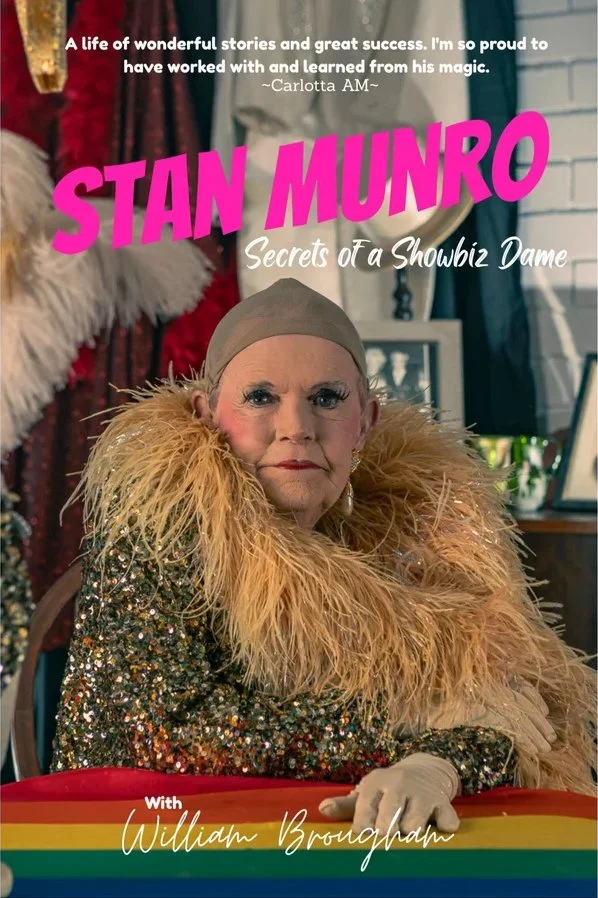
Secrets Of A Showbiz Dame, by Stan Munro with William Brougham is a memoir of survival, reinvention, and unapologetic authenticity told with wit, warmth, and wicked humour. Exploring Sydney and Melbourne’s golden drag scenes, Stan’s story is as fierce as it is fearless.
The book is available here : https://www.planetarypp.com.au/products/stan-munro-secrets-of-a-showbiz-dame
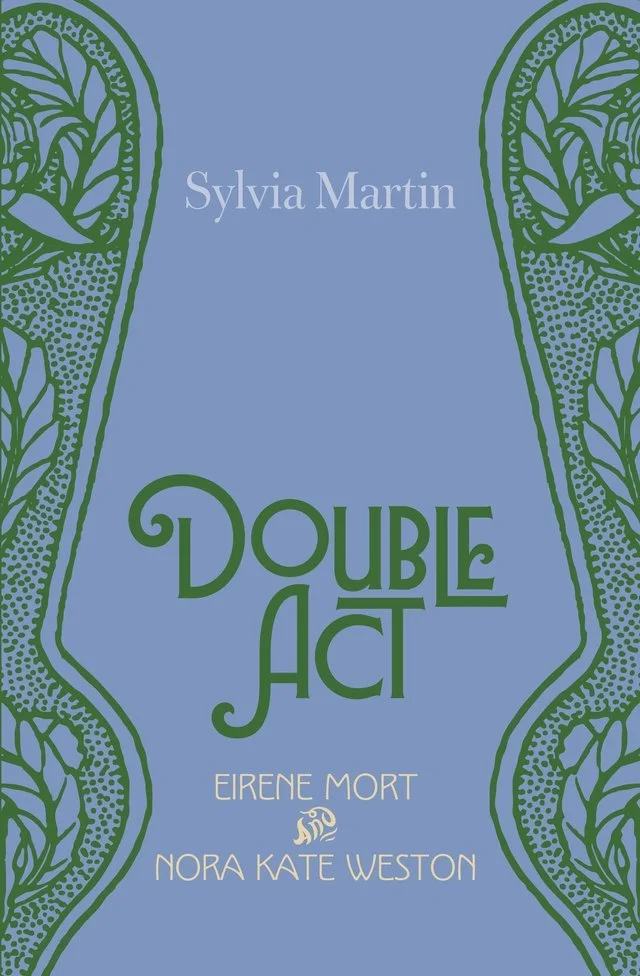
Sylvia Martin’s new book, Double Act, explores the lives of the artists Eirene Mort and Nora Kate Weston, whose deep and enduring relationship underpinned their public creative partnership for over 60 years. During the early nineteen hundreds the two women travelled together through New South Wales gathering ideas for their artwork. They made a home together in Vaucluse, Sydney. The book is the story of enduring love between women and the power of a creative partnership.
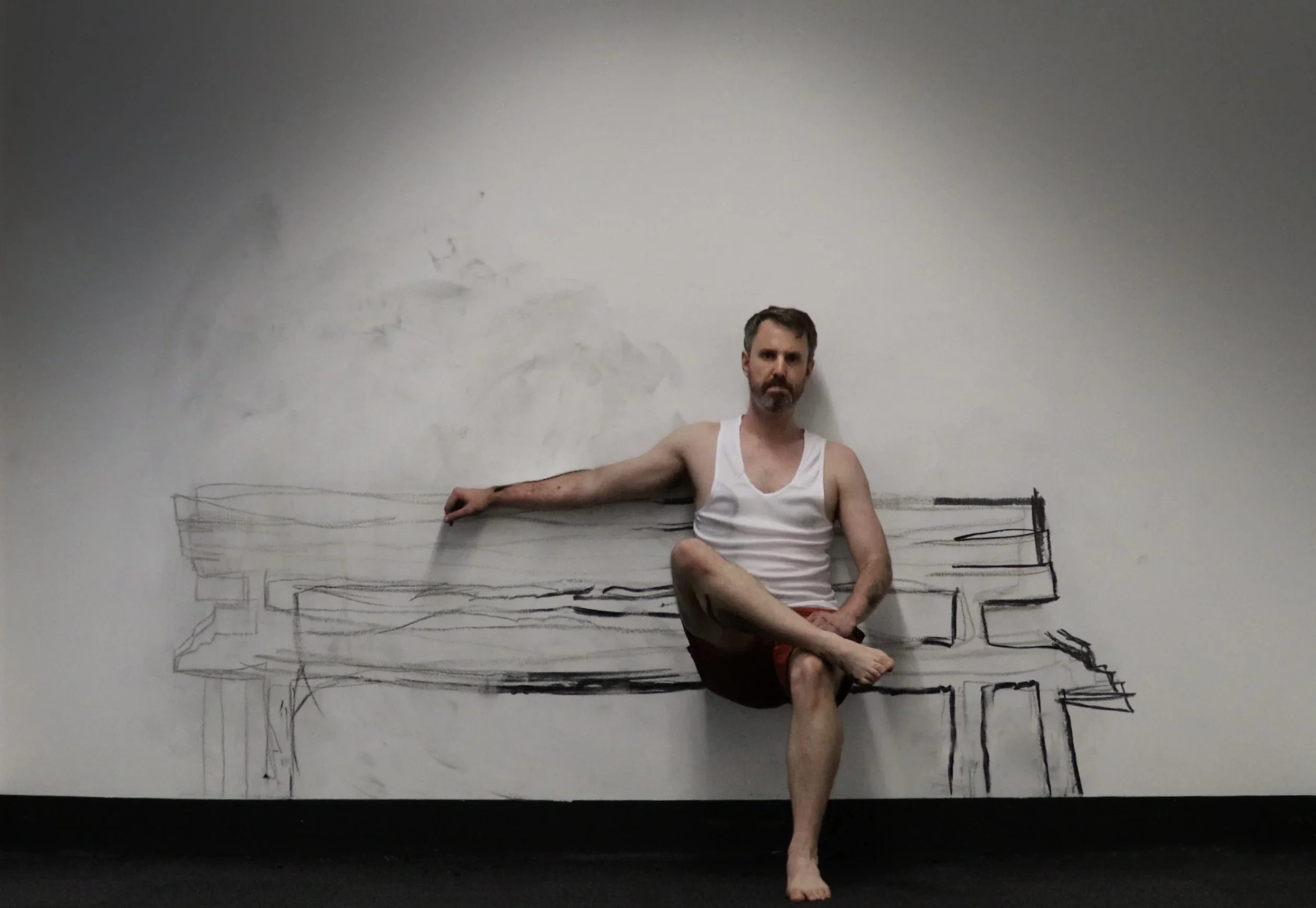
Todd Fuller “Don’t forget to remember, 2026.”
Don’t forget to remember, 2026
Todd Fuller, who is an active member of Pride History Group, recently presented a performance artwork that explores Australia’s difficult histories of violence against the LGBTIQ community, and in particular gay and trans men at Australian beats.
Using the imagery of a park bench, in stark contrast to the rainbow benches which celebrate LGBTIQ people, Todd’s moving work asks us to remember the history of homophobic and transphobic violence, and do all in our power to resist it.
You can watch a video of Todd’s performance here: https://www.toddfuller.com.au/performance#/dont-forget-to-remember-2026/
The Just Archives Collaboratory
The project started with a set of transdisciplinary workshop collaborations at Sydney Social Sciences and Humanities Advanced Research Centre at Sydney University, in February and March 2025, bringing together archivists, researchers, artists, educators, and cultural organisers. Their purpose was to investigate the politics of care, ethics, and histories of queer and trans archives in the Asia-Pacific region. As its Co-directors Kush Patel (Manipal Academy of Higher Education) and Susan Potter (University of Sydney) say, rather than producing a single research report, the Collaboratory functions as an ongoing hub that yields "results" through collaborative methodologies, public dialogues and digital scholarship. You can contact Susan Potter at susan.potter@sydney.edu.au
Qtopia Sydney update
After another huge Pride Fest month of jam-packed activity, the small team at Qtopia Sydney are focusing on the coming months, with the LOVING exhibition [sponsored by the European Union Delegation to Australia] now being extended to September. This international exhibition is a must see, get along Wednesday to Sunday from 10.30 – 4.30pm [it’s Free entry on Sundays thanks to the City of Sydney]. To see their current exhibitions, activities and events go to https://qtopiasydney.com.au
News from Hunter Rainbow History Group - more heritage listings
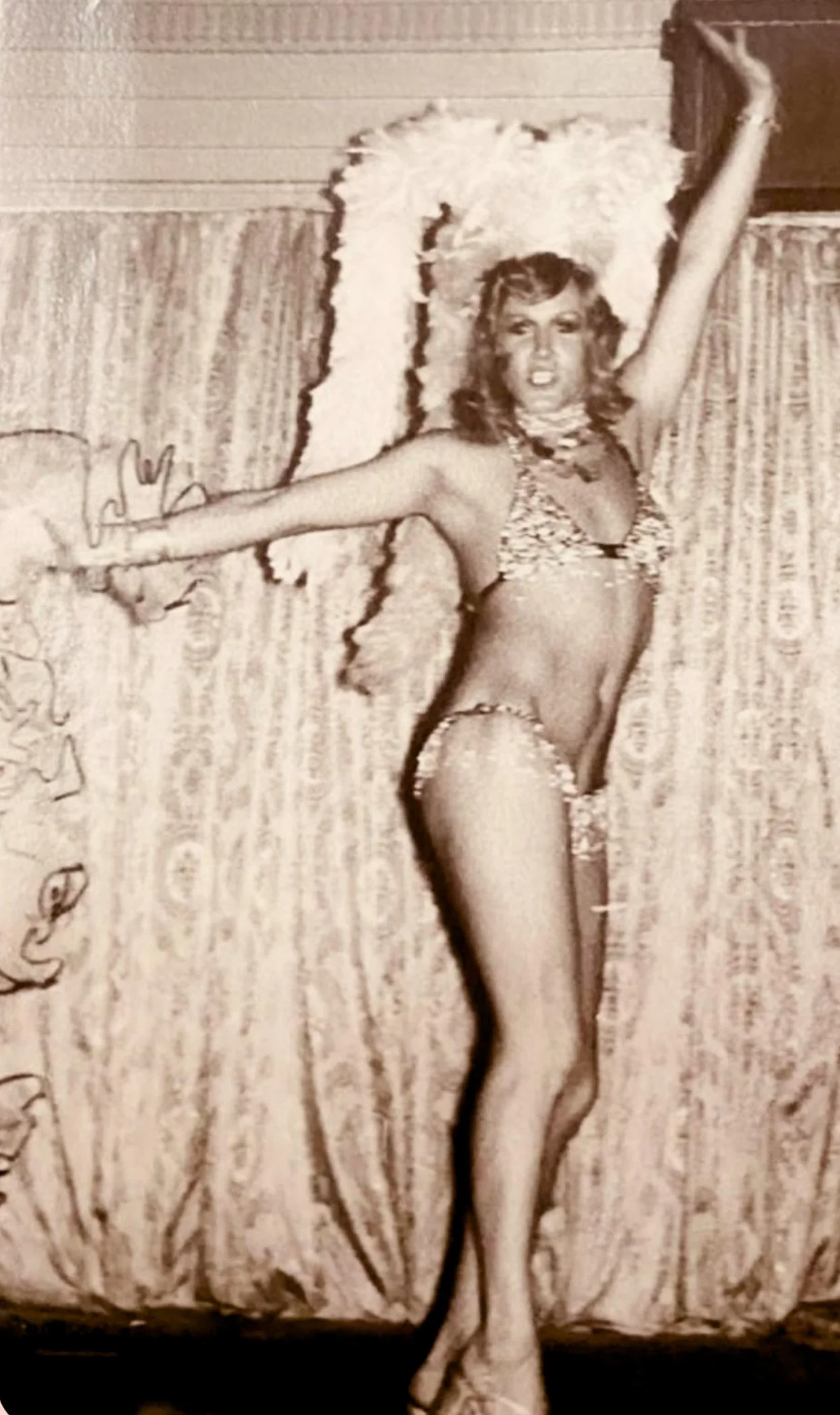
Glenda Star/Doris Fitspatrick
The Star Hotel on King Street, Newcastle achieved heritage listing on 6th May 2026
The Star Hotel had been a rambling working-class sailors’ pub in Newcastle West, built around its original 1855 Hunter Street footprint. Previous Heritage Studies emphasised its straight history, the 1979 King Street youth riot, and the colourful licensees, to the neglect of its significant place in Newcastle’s camp, lesbian, gay, trans, queer community.
Grace Fey, one of the managers of the queer/gay Bernies Bar, now leasing the Star’s King Street bar, has led the push to get the site listed as State Heritage. Grace had hosted Sunday history talks by the Hunter Rainbow History Group, so inevitably it became HRH’s job to help with the submission. However, our first priority was to create a Star Hotel history place marker at the entrance of Bernies— one side straight history and the other side queer. It was launched by the Newcastle Lord Mayor Ross Kerridge last year.
The second project was the Star Hotel/King Street Heritage listing
The heritage of the Star as an LGBTIQ site is intangible: the memories, images, and sounds of performers, and the events which led from the first performances on the back bar under the fans to “one of the back rooms off the side lane” to the middle bar from a tiny stage to a larger one.
Drag has a long history in Newcastle, particularly in the middle bar of the Star. It was a “tradition” for “girls” to meet sailors off incoming sailing ships in the late 19th century. There was the high profile Yellow Socks “gang” in 1952, which held monthly drag performances at the National Park Ladies Bowling Club hall. Oral histories confirm that teenagers in the late 1950s stepped into frocks to lip-sync to recordings at the Terminus and Orient pubs around the east end of Hunter Street. At the Orient Hotel, some performed on the bar. And were well received until the the city’s Detectives moved them on to the Star Hotel, and told them “this is your new hotel”. Newcastle was also a significant player in a drag circuit that included the Star, the Orana Hotel at Lake Macquarie, and Les Girls in Kings Cross.
Quotes from Hunter Rainbow oral history interviews also describe the impact for young Newcastle lesbians and gays coming out, watching Glenda, Stella, and the crew perform.
In 1979, as many became wary of proposed anti-discrimination laws, the licensee of the Star, Donnie Graham, foolishly launched a blatant homophobic campaign. He ranted about his Hotel being “a hot bed of homos”. He banned the drag performers and their audience. This sparked an early intervention by Sydney’s Gay Solidarity Group, which picketed the Star. The Heritage-listed Star was an amazing place for lesbians, gays, and straights to hang out, a place where bikers, sailors, musos, surfers, and students could meet and chat, watching drag performances in the middle bar. It was the perfect place for misfits in a respectable town. Its heritage listing is an important recognition of the LGBTI history of Newcastle.
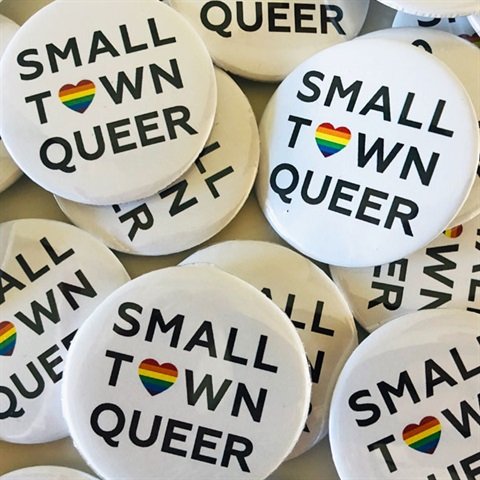
Small Town Queer badges
Small Town Queer
Explore the rich tapestry of Tweed's LGBTQIA+ history from the early 1900s to the present, uncovering local stories of sexual liberation, love, activism, discrimination, defiance, performance, spaces, places and local business.
Visit: https://museum.tweed.nsw.gov.au/explore/people-places/small-town-queer
Do you want to help?
Pride History members are always busy on a number of projects. Do you want to get involved?
We can always use some help to:
log oral history interviews
chase up permissions to publish interviews
work on one of our current history projects
Or do you have your own initiative you're wanting to work on? Get in contact!
And don't forget our website www.pridehistory.org.au for reading
Thanks to everyone who helped put this newsletter together - Garry Wotherspoon, John Witte, Warner Ward and Teresa Savage. Please let us know if you have any feedback about anything in this newsletter. We love to hear your views. Send your feedback to us here
Feel free to forward this newsletter to your friends and networks.
We are always happy to take enquiries for new memberships. Become a member of Pride History Group and get involved today!
And don't forget that members are encouraged to come along to monthly meetings to find out what's going on, catch up with friends and get involved.
We currently meet online on the 3rd Monday of each month. We hope to see you soon.